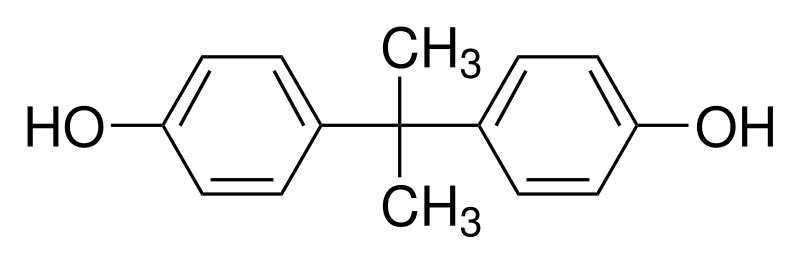
Showing posts with label BPA. Show all posts

Thursday, August 2, 2012

EPA Issues Analysis of Alternatives for Bisphenol A (BPA) Uses

The USEPA has issued a draft analysis of alternative chemicals that can be used instead of Bisphenol A (BPA) in thermal paper. According to EPA's Design for the Environmenet (DfE) program:

This draft report is an assessment of 19 chemical alternatives that may substitute for BPA, which is used as a developer in thermal paper. In addition, this report provides background information about how thermal paper is made, and considerations for choosing an alternative. A chemical's inclusion in the report does not constitute EPA endorsement. This draft report does not identify functional chemicals with low concern for all human health and environmental hazard endpoints; all of the alternatives are associated with some trade-offs.

The focus on thermal paper is because it "is widely used for cash register receipts, airline tickets, event and cinema tickets, and grocery store adhesive labels" and because this narrow focus was one area where alternatives exist. In addition, "workers in certain occupations, such as cashiers and restaurant servers who handle thermal paper often, may be at greater risk of exposure." Young children and teenagers entering the workforce may have especially high exposures. Concerns for BPA exposure include endocrine disruption and neurological changes.

The full 492-page PDF can be viewed or downloaded here.

The draft analysis can also be read online as smaller files here.

Wednesday, August 10, 2011

EPA's Design for the Environment (DfE) Issues Final Alternatives Assessment Criteria

The USEPA Office of Pollution Prevention and Toxics has released its final alternatives assessment criteria for evaluating human and environmental effects in accordance with its Design for the Environment (DfE) program.  DfE helps companies, states and other organizations to "identify safer alternatives to chemicals that may pose a concern to human health and the environment."  More information on the DfE program can be found on EPAs web site.

DfE Alternatives Assessments are "multi-stakeholder partnerships convened to evaluate priority chemicals and functional alternatives."  The goal is to "inform substitution to safer alternatives and reduce the likelihood of unintended consequences that might result if poorly understood alternatives are chosen."  In other words, they don't want to replace one bad chemical with another bad chemical just because they don't know enough about it.  According to DfE, its "expertise and focus is on chemical hazard," and encourages stakeholders to "assist with the selection of the scope of the alternatives assessment, help EPA consider economic realities, and identify likely functional alternatives for evaluation."

So whereas REACH in the EU specifies substances of very high concern and requires authorization for continued use (along with a substitution plan), the DfE program works directly with companies and other stakeholders to fix the problem together.

EPA is currently preparing DfE alternatives assessments for Bisphenol A (BPA), Decabromodiphenyl ether (decaBDE), and Nonylphenol ethoxylate (NPE) surfactants.  The draft reports for public comment are expected to be released by EPA later this year.  In addition, EPA has underway an alternatives assessment for Hexabromocyclodecane (HBCD) in polystyrene insulating foam.  And EPA also plans to conduct an alternatives assessment for phthalates with a kickoff meeting scheduled for August 24, 2011.

Version 2.0 of the Alternatives Assessment Criteria document can be downloaded as a PDF here.

More information and links to the phthalates kickoff meeting signup materials can be found in the right sidebar of the DfE page.


Wednesday, July 27, 2011

EPA Gives Advance Notice - Wants Input on Whether to Require Toxicity Testing on Bisphenol A

The USEPA is considering a rulemaking in which they would require additional toxicity testing on bisphenol-A, known commonly as BPA.  Yesterday EPA published an "Advanced Notice of Proposed Rulemaking" asking for public comment on whether and/or how they should require testing "to determine the potential for BPA to cause adverse effects, including endocrine-related effects, in environmental organisms at low concentrations."  The notice is subject to a 60-day comment period.

According to the Federal Register notice, BPA is a high production volume (HPV) chemical and "is a reproductive, developmental, and systemic toxicant in animal studies and is weakly estrogenic."  The concern is that while there have been quite a few studies conducted, many of these have what some believe are significant flaws, thus calling into question their validity and/or ability to be used for regulatory purposes.  BPA is a common ingredient in plastics and has come under intense scrutiny for its potential to be an endocrine disruptor.  Given the disagreement over the scientific evidence and the significant ramifications of a BPA ban (and the similarly significant ramifications of a lack of BPA should the potential adverse effects be demonstrated), EPA is seeking to conduct definitive testing to settle the science.

In addition to toxicity testing, EPA is also considering environmental monitoring to determine the levels of BPA in "surface water, ground water, drinking water, soil, sediment, sludge, and landfill leachate in the vicinity of expected BPA releases."  At present, the advanced notice is focused "only  toward the environmental presence and environmental effects of BPA."  While EPA continues to work with the Department of Health and Human Services on potential human health issues, it "is not considering any additional testing specifically in regard to human health issues at this time."

The full Federal Register notice can be viewed here.  The deadline for public comment is September 26, 2011.

Wednesday, February 23, 2011

US Chemical Makers to Seek Authorization for Continued European Use of Phthalates Under REACH Regulation


As noted previously the European Commission has announced that "six substances of very high concern will be banned within the next three to five years unless an authorisation has been granted to individual companies for their use." Three of these substances (DBP, BBP, and DEHP) fall into a general category called phthalates and now a major US trade association has indicated that phthalate manufacturers they represent will file applications for authorization to continued use in "important medical applications."  According to Steve Risotto, Phthalate Esters Panel, quoted in the American Chemical Council (ACC) statement:
"There is a large body of scientific information and a number of government safety assessments in the U.S. and abroad that give the manufacturers of these three phthalates confidence that their products are being used safely. In fact, phthalates are one of the most extensively studied groups of chemical compounds in the world." 
US manufacturers "will work with European regulatory authorities" (primarily the European Chemicals Agency, ECHA, in Finland) to "submit all the necessary data and seek approval for the continued use of these substances."  Without authorization, use of all six of the substances of very high concern (SVHC) will cease at their sunset dates in either 2014 or 2015. According to ECHA, these SVHCs are "are carcinogenic, toxic for reproduction or persist in the environment and accumulate in living organisms."

More information on phthalates can be found on the Phthalates Wikipedia page or ACC's Phthalate Esters Panel web page.  For contrasting information from an NGO activist organization, the Environmental Working Group also has a Phthalate web page.

Wednesday, February 16, 2011

New Endocrine Disruptor Chemical Bill Introduced in House by Ed Markey

Actually, its a reintroduction of a bill he introduced in the last Congress.  Last year it was H.R. 5210 and was glued into another bill that passed in the House, but a companion bill never made it out of Senate committee.  So Representative Ed Markey of Massachusetts is trying again in the House.  The idea is to update EPA's current Endocrine Disruptor Screening Program.

The new bill, H.R. 553, is called the Endocrine Disruptor Screening Enhancement Act and it would amend the existing regulatory authority, the Safe Drinking Water Act, by:
  • requiring EPA to test non-pesticide chemicals that may be found in drinking water and develop a plan and timetable to identify chemicals to be tested;
  • requiring EPA to periodically review the current state of the science to determine if testing protocols should be revised; and 
  • allow EPA to accelerate the testing of suspected endocrine disruptors and create a petition process that would allow the public to suggest chemicals for accelerated testing.
One problem with the current program (in addition to the fact that it is a decade behind schedule) is that it relies on Tier I studies being done to prioritize those chemicals needing Tier II testing.  Which makes sense except for the fact that EPA doesn't actually know what the Tier II tests will consist of yet.  So one complaint is that you can't possibly know how to prioritize if you don't know what you are prioritizing for!  Still, last November the Agency published a list of 134 "second list" chemicals, 106 of which are found in drinking water.  This is on top of the 67 "first list" chemicals identified in the spring of 2009.

The current bill has been referred to the Committee on Energy and Commerce chaired by Republican Fred Upton of Michigan.


dfd

Friday, January 7, 2011

EPA Takes Next Step in Test Rule for BPA

Almost a year ago the EPA issued a Chemical Action Plan (CAP) for bisphenol-A, commonly called simply BPA, a chemical used in many plastics.  And just before the holiday break EPA took the next step in managing what it sees as potential risks of BPA by sending a proposed test rule to the Office of Management and Budget (OMB).  The proposed rule looks to require toxicity testing related to environmental effects, including the potential for endocrine disruption.

No human health-related testing is being proposed at this time since most human exposure seems to be through packaging and that comes under the jurisdiction of the Food and Drug Administration.  FDA and the Centers for Disease Control are undertaking new studies.  But EPA is looking at evaluating the potential for environmental exposures from BPA in surface, ground, and drinking waters, and also may request monitoring near landfills, soil and sediment, as well as other sources of BPA leakage.

It's unclear how long OMB will take in its review.

The CAP for BPA can be downloaded here.

Other action plans and information can be found on EPA's Existing Chemicals web site.

Tuesday, November 30, 2010

As Europe Bans BPA in Baby Bottles, USEPA Works with BPA Manufacturers in Design for the Enviroment

Bisphenol-A, more commonly known as BPA, has gotten a lot of attention lately.  As noted last week, the EU has voted to ban BPA from baby bottles beginning in March 2011, and not long ago Canada declared BPA to be CEPA-toxic.  Meanwhile in the USA the Environmental Protection Agency is following through on at least some of the provisions of its Chemical Action Plan for BPA.  One of those provisions was for EPA to engage industry in its Design for the Environment program, or DfE.

Initially the DfE program is focusing on "finding safer alternatives to BPA used as a developer for dyes in thermal paper, which is often used in cash register or sales receipts."  This narrowing down into a specific use of the chemical is typical of DfE, where the goal is to examine all the ways to solve one particular identified risk area.  In the case of BPA, the DfE program officially kicked off in July 2010 and is just now compiling a list of viable BPA alternatives and alternative technologies.  The goal is to complete a draft evaluation of ecological and human health hazards and environmental fate by May of 2011, with a final report in October 2011.

According to the DfE site, "some receipts made of thermal paper may now contain as much as 10 mg of BPA, which could pose a risk for human exposure, as well as account for substantial environmental releases of BPA. The goal of this assessment is to facilitate movement towards safer alternatives used in thermal paper."

More information on the program, and a list of participating companies and their representatives, see here.  Participants include thermal paper manufacturers and converters, chemical manufacturers, retailers, trade associations, trade unions, NGOs, government representatives, green chemistry consultants, and others.  All working to find solutions for a particular identified chemical use pattern.

Friday, November 26, 2010

EU Moves to Ban BPA from Baby Bottles

This week the European Commission's Standing Committee on the Food Chain and Animal Health moved to ban the use of bisphenol A (BPA) in baby bottles beginning next spring.  BPA is an organic chemical used to make polycarbonate plastics like those in baby bottles and thousands of other plastic products.  It has come under attack as a possible endocrine disruptor, which "can mimic the body's own hormones and may lead to negative health effects."

That said, various government and regulatory bodies around the world have defined "safe levels" for humans, though new studies have raised new concerns about whether those levels truly are safe.  The problem is that effects are much more subtle and hard to define, and tests to measure (and then understand the significance of) potential endocrine disruption are still being developed.  Still, last year The Endocrine Society issued a position statement on endocrine disrupting chemicals.


Responses from the EU plastics industry and health advocacy groups was as one might expect.  Industry feels that the decision goes against the totality of the scientific evidence.  Health NGOs believe the EU action doesn't go far enough as it doesn't address other uses of BPA that also may lead to infant and child exposures.

In any case, the Commission's decision will lead to a Directive to prohibit the manufacture of BPA infant bottles by March 1, 2011 and prohibit the placing on the market and import of BPA infant bottles after June 1, 2011.  Member States have until February 15th to develop national level regulations to implement the Directive.

Tuesday, October 19, 2010

Does Canada's Declaration that BPA is Toxic Make Sense?

I noted last week that the Canadian government formally labeled Bisphenol A (BPA) as "toxic," and added it to Schedule I of the Canadian Environmental Protection Act of 1999. But does their action make any sense?  After all, the European Food Safety Authority (EFSA) had only days before stated their belief that BPA is safe for use in food-contact items.  The USEPA isn't basing any of its proposed actions on human health effects.  The USFDA seems to think BPA is okay to use.

The American Chemistry Council (ACC), which represents major chemical manufacturers and plastics chemical manufacturers (including BPA), notes that:
"...Environment Canada’s announcement is contrary to the weight of worldwide scientific evidence, unwarranted and will unnecessarily confuse and alarm the public."

According to ACC, Enviroment Canada's "decision also appears to contradict the very recent opinion of Health Canada, which stated in August that ‘the current dietary exposure to BPA through food packaging is not expected to pose a health risk to the general population, including newborns and infants.’"

Canada has issued a series of risk management action milestones that include such actions as prohibiting the importation of baby bottles containing BPA, reviewing all medical devices and notifications for substances used in the packaging of baby formulas, and facilitating the assessment of proposed industry alternatives to bisphenol A used in can linings.

While there seems to be quite a difference of opinion on the hazards of BPA, or lack of hazard, the primary concern of Canada is that "the neurodevelopmental and behavioural dataset in rodents, though highly uncertain, is suggestive of potential effects at doses at the same order of magnitude to 1-2 orders of magnitude higher than exposures."  So the potential for hazard is still contentious, but Canada feels that the the "potential sensitivity to the pregnant woman/fetus and infant," and the suggestion from rodent studies that there is "heightened susceptibility during stages of development in rodents."  As such they have determined that "it is considered appropriate to apply a precautionary approach when characterizing risk."

Friday, October 15, 2010

Canada Declares Bisphenol A (BPA) Toxic...Will the US Follow Suit?

The Canadian government has formally labeled Bisphenol A, commonly called BPA, as "toxic," and added it to Schedule I of the Canadian Environmental Protection Act of 1999.  They now will propose mechanisms to protect human health and the environment from the risks of BPA exposure.  They have already banned the use of polycarbonate baby bottles that contain BPA.   The assessment also offers additional recommedations for removing or restricting BPA use in food contact materials and cosmetics, as well as provisions for recycling and limiting discharges in industrial effluents. Ironically, this announcement comes only days after the European Food Safety Authority (EFSA) reaffirmed its belief that BPA is safe for use in food-contact items.

 More information can be found on the assessment web page.

The question now turns to what will happen in the United States.  The USEPA had already issued an "action plan" for BPA under their current TSCA authority.  In that plan the EPA noted that it was considering a 5(b)(4) rulemaking to "identify BPA on the Concern List as a substance that may present an unreasonable risk of injury to the environment on the basis of its potential for long-term adverse effects on growth, reproduction and development in aquatic species at concentrations similar to those found in the environment."  They also were considering initiating a section 4 rulemaking to obtain more data and work on a collaboration with industry to find alternatives under EPA's "Design for the Environment" program.

Interestingly, EPA was not initiating any action based on concerns for human health, as they felt that particular area was too uncertain to take action at that time.  It seems Canada has disagreed.

So it remains to be seen whether the Canadian action will spawn similar action in the US.  Whether or not this happens it seems clear that state and local jurisdictions are not waiting for EPA and/or FDA; they are initiating their own restrictions and bans.

A PDF of the EPA action plan can be found here.

Friday, September 10, 2010

Does the BPA debate epitomize the need for reform of the TSCA chemical law?

At least one person thinks so.  Writing in the online OnEarth Magazine, Wendy Gordon believes that the seemingly endless debate over BPA - the chemical used in myriad plastic bottles and other products - is a strong signal of the need for TSCA reform.  She laments that "[a]fter more than 10 years of research involving hundreds of studies, government health officials according to The New York Times (September 6, 2010) "still cannot decide" whether the science is adequate to regulate BPA more strictly, an action the Food and Drug Administration has the authority to take but just won't, or can't...or would rather put off until after the next round of studies."

And herein lies a recurring problem with chemical regulation.  How much data are enough?  Rarely are the data so overwhelmingly clear that a particular chemical will definitely create adverse effects that the path forward is obvious to regulators, industry, and NGOs alike.  Rather, the norm is that there are some data that suggest, maybe even strongly suggest, that there are concerns.  But then the realities of decision-making come into play. What is the threshold of concern for taking action?  Should BPA, as an example, be banned outright based on the data we have?  Or should more studies be conducted to dig deeper into the specific concerns suggested by earlier studies?  These are often more value judgments than clear scientific direction.

The answer is that we don't have an answer. Each case will be different as the circumstances of hazard and exposure will be different from one chemical to another and one use pattern to another.  Which is why the debate seems to go on and on with no resolution.  Given the significant business and personal consequences of making the wrong decision - banning something that doesn't need to be or not banning something that should be - clearly a better process is required.

Will the proposed TSCA reform bills now sitting idle in the House and Senate be that better process?  It seems like it could be a moot point given the current predictions for the fall elections in the US.  No matter what happens in November the bills will have to be reintroduced in the next congress and the debate will start anew.  But the direction the bills take could be significantly affected by the make up of the two bodies of governance.

Or perhaps, as Wendy Gordon suggests, we will just see the continuation of "endless debate."